
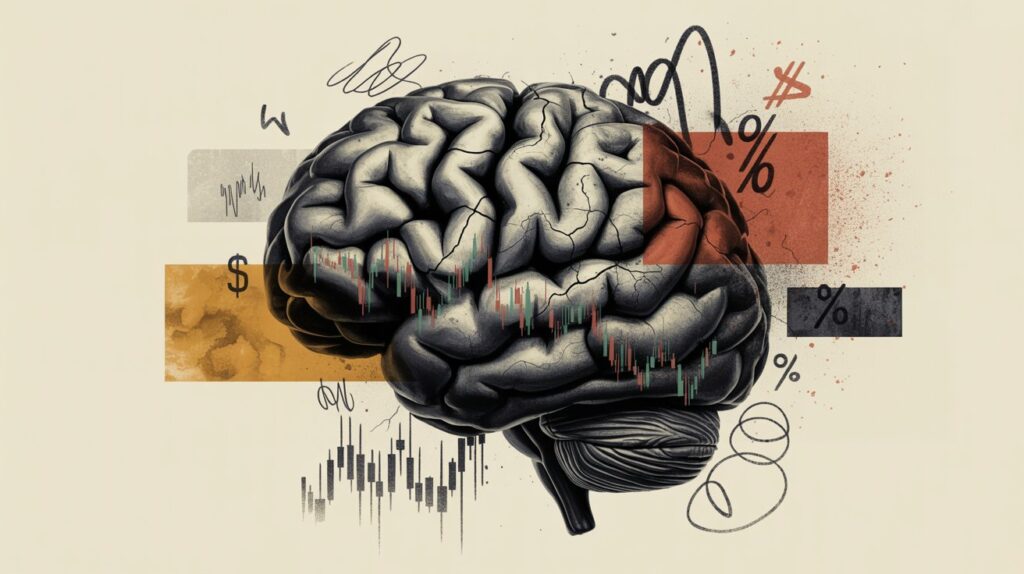
Imposter syndrome affects up to 70% of successful traders, causing them to attribute wins to luck rather than skill and fear of being exposed as frauds despite objective evidence of their competence. This psychological phenomenon intensifies as traders become more profitable because increased expertise reveals the true complexity and uncertainty of markets. Here’s why even winning traders doubt themselves and the evidence-based strategies to overcome it.
I once met a trader who’d made $80,000 in six months. He sat across from me at a coffee shop, visibly uncomfortable, and said something that stuck with me: “I feel like I’m just one trade away from being exposed as a fraud.”
Here’s the strange part, his win rate was 64%.
That conversation changed how I think about success in trading. Because if someone crushing it still feels like an imposter, what hope do the rest of us have? Turns out, quite a bit. But first, we need to understand why imposter syndrome in trading hits hardest when you’re actually winning.
The paradox nobody talks about
Here’s what messes with your head: the better you get at trading, the more you realize how much you don’t know. It’s not just you. Research shows that up to 70% of people experience imposter syndrome at some point in their lives, and traders are particularly vulnerable.
Think about it.
You spend months learning trading psychology, backtesting strategies, studying charts until your eyes blur. Then you finally crack the code or so it seems. You string together a few winning trades. Your account grows. You should feel confident, right?
Wrong. Instead, you feel like you got lucky. Like the market gave you a gift it’ll take back the moment you get comfortable. This isn’t a weakness. It’s actually a sign you’re becoming competent enough to recognize just how uncertain the markets really are.
Dr. Pauline Clance, who first identified this phenomenon, found that high achievers often discount their accomplishments. In trading, this plays out in devastating ways, hesitating on valid setups, cutting winners too early, over-analyzing until opportunities vanish.
Why your brain lies to you about your success
Let me tell you about the imposter cycle. It’s insidious, and I’ve watched it destroy otherwise talented traders.
It works like this: You spot a perfect setup. Your strategy says take it. But your brain whispers, “What if you’re wrong again?” So you either over-prepare (analyzing until the setup’s gone) or you freeze completely. If you do take the trade and it wins, you don’t celebrate, you just think, “Lucky.” If it loses, you think, “See? I knew I wasn’t good enough.”
This cycle reinforces itself with every trade.
What’s fascinating is that beginners don’t experience this as intensely. They’re too busy riding the Dunning-Kruger effect, that blissful peak of “Mount Stupid” where you don’t know enough to know what you don’t know. Early wins feel like validation of genius. It’s only when you develop real competence that the doubt creeps in.
Here’s the uncomfortable truth: only 1-3% of day traders remain consistently profitable over five years. When you’re in that tiny percentage, you know how rare it is. That knowledge doesn’t breed confidence, it breeds fear of regression to the mean.
The market has a way of humbling everyone eventually. Even the best strategies have losing streaks. Even the most disciplined traders make mistakes. And when you’re profitable, you know this intellectually. Your brain keeps whispering: “You’re just on the lucky side of variance. For now.”
Understanding the spectrum: Overconfidence vs. healthy doubt vs. imposter syndrome
Not all doubt is created equal, and understanding where you fall on this spectrum is crucial for your trading performance.
| Aspect | Beginner overconfidence | Healthy doubt | Imposter syndrome |
| Self-Assessment | “I’ve figured out the market” | “I have an edge but respect uncertainty” | “I’m a fraud despite my track record” |
| After Winning Trades | Confirms my genius | Normal outcome of my edge | Must have been luck or timing |
| After Losing Trades | Bad luck or market manipulation | Expected cost of doing business | Proof I don’t belong here |
| Risk Management | Oversized positions, “can’t lose” | Rule-based, consistent sizing | Undersized or completely frozen |
| Strategy Approach | Rarely adjusts, assumes perfection | Tests and refines systematically | Constantly tweaks, seeking perfection |
| Learning Attitude | “I know enough already” | “Always something new to learn” | “I’ll never know enough” |
| Execution Quality | Impulsive, breaks rules | Disciplined, follows plan | Hesitant, misses valid setups |
| Longevity Risk | Very high (blow-up likely) | Low (sustainable career) | Medium (death by missed opportunities) |
| Emotional State | Euphoric, invincible | Calm, cautiously optimistic | Anxious, fearful, stressed |
| Response to Market Complexity | Dismisses or ignores it | Acknowledges and adapts to it | Overwhelmed and paralyzed by it |
The sweet spot is healthy doubt, enough humility to keep learning and manage risk properly, but enough confidence to execute your edge when opportunities arise. Most profitable traders I know live in this middle ground, though they occasionally drift toward imposter syndrome during drawdowns.
The social media effect is destroying your confidence
Nobody posts their losing trades.
You scroll through trading communities and see nothing but green. Lamborghinis. Five-figure days. Guy Fieri levels of confidence. Meanwhile, you’re grinding out consistent 2% monthly returns and feeling inadequate.
But here’s what I learned: those highlight reels are statistical outliers or outright fabrications. The traders who are actually making it rarely have time to flex on social media. They’re too busy managing risk, protecting their edge, and dealing with the psychological weight of real money on the line.
Comparison culture in trading is particularly toxic because you’re comparing your behind-the-scenes reality to everyone else’s highlight reel. You see their wins. You feel your losses. The math doesn’t add up to confidence.
I stopped following trading influencers entirely. Not because they’re all frauds (though some are), but because comparison was poisoning my ability to trust my own process. Your only comparison should be to your previous self. Did you follow your trading plan today? Did you manage your emotions? Did you take the setups your strategy identified?
That’s it. That’s the scoreboard.
How imposter syndrome actually shows up in your trading
Let me get specific because awareness is half the battle.
You know you’re dealing with trading self-doubt when you start hesitating at entry points. The setup is perfect. Every criteria is met. But you freeze. “Just one more indicator,” you tell yourself. By the time you’re “ready,” the opportunity is gone.
Or maybe you take the trade, but you’re so anxious about giving back gains that you exit prematurely. You had a target at 3R, but you took profits at 0.8R because “a win is a win.” Except over time, this behavior destroys your edge. Your winning trades don’t compensate for your losers anymore.
I’ve seen traders, good traders, start revenge trading after losses, not from greed or anger, but from a desperate need to prove they’re competent. “I’m not a fraud,” their behavior screams. “I can do this.” But that desperation leads to forcing trades, breaking rules, and ultimately confirming their worst fears about themselves.
Then there’s the opposite reaction: analysis paralysis. You add filters to your strategy. Then more filters. Then you backtest again, and again. You tell yourself you’re being thorough, but really, you’re procrastinating on the hard work of execution because you’re terrified of being wrong.
Studies on trading psychology have shown that moderate self-doubt can actually improve performance, it keeps you humble and prevents overtrading. But excessive doubt? That’s where it crosses from healthy skepticism into self-sabotage.
When success felt like fraud: A trader who conquered the doubt
I need to tell you about Louise Bedford, because her story might save your trading career.
Louise is a trained psychologist who’s been trading for over 30 years. She’s writtensix bestselling books. She has run a mentor program helping traders since 2000. You’d think someone like this would never doubt herself.
You’d be wrong.
Louise started trading while working as a national manager for a US multinational. Then a debilitating health issue forced her to leave. Suddenly, trading wasn’t a side hustle, it was survival. And here’s the part that matters: it took her three years just to break even. Five years to become consistently profitable.
And even after all that success, even after the books and thousands of mentored traders, she still dealt with imposter syndrome.
In interviews, Louise describes it like having an angel and devil on each shoulder. One voice says “you can do it,” while the other whispers “who are you to think you know what you’re doing?”
Her breakthrough? She reframed it. Instead of seeing doubt as weakness, she recognized it as a sign of a growth mindset. It kept her humble. It kept her learning. It prevented the overconfidence that destroys so many traders.
Louise’s advice: “Acknowledge it and accept it as part of developing your skills, confidence, and character, because it signals that you’re stepping outside your comfort zone, which is where you develop and grow.”
She didn’t wait for the doubt to disappear before succeeding. She succeeded despite it. The traders who make it long-term aren’t the ones without doubt, they’re the ones who’ve learned that confidence doesn’t come before action, it comes because of action.
The step-by-step system for building genuine trading confidence
Alright, enough diagnosis. Let’s talk about solutions. Real, evidence-based strategies that actually work.
Step 1: Separate feelings from facts
Your feelings about your trading aren’t facts about your trading. This seems obvious written down, but in the moment, when your stomach is churning and your palms are sweating, the distinction blurs.
Start keeping a trading journal that tracks both. One column for your emotional state (“anxious,” “confident,” “desperate”). Another column for objective outcomes (win/loss, R-multiple, rule adherence). After 50 trades, patterns emerge. Usually, you’ll discover that your feelings have zero correlation with your results.
I felt like a genius on some of my worst trades. I felt like an idiot at some of my best. The market doesn’t care about my feelings. Neither should my assessment of my abilities.
Step 2: Reframe how you think about luck
Stop calling good trades “lucky” and bad trades “mistakes.” This cognitive distortion is killing your confidence.
Instead, evaluate whether you followed your process. Did you identify the setup correctly? Did you size appropriately? Did you manage the trade according to plan? If yes, then the outcome, win or loss, is just one sample in your statistical edge.
Here’s a reframe that helped me: “I didn’t get lucky; I prepared, and preparation creates opportunity.” Document your pre-trade analysis. When a trade works out, you have proof it wasn’t luck, it was pattern recognition, risk management, and execution.
Step 3: Build your win file
This is non-negotiable. Create a folder, digital or physical, where you save evidence of your competence. Screenshots of profitable trades. Positive feedback from mentors. Your best trade analyses. Monthly statements showing growth.
When imposter feelings hit (and they will), you need ammunition. Your brain will try to convince you that you’re a fraud. Your win file is evidence to the contrary. It’s not about ego, it’s about accuracy.
I review mine quarterly. Not to brag to myself, but to recalibrate. To remember that the doubt is a feeling, not a fact.
Step 4: Embrace probabilistic thinking
You’re going to lose trades. Lots of them. Even with a 70% win rate, you’ll be wrong 3 out of 10 times. Understanding probability in trading isn’t just about the math, it’s about emotional resilience.
The best traders I know think in terms of expectancy over time, not individual outcomes. They know their edge plays out over hundreds of trades, not dozens. This perspective transforms losses from “proof I’m incompetent” into “normal cost of doing business.”
As trader Mark Douglas wrote, “You don’t need to know what’s going to happen next to make money.” You just need to execute your edge consistently and let probability do its work.
Step 5: Scale position size to your confidence
This is counterintuitive, but hear me out. If you’re experiencing crippling doubt, don’t fight it, work with it. Reduce your position size until you can execute without anxiety.
I know what you’re thinking: “But smaller positions mean smaller gains!” True. They also mean you can build the confidence bank through successful execution without the emotional volatility that destroys discipline.
Think of it as deliberate practice. You’re training your nervous system to trust your process. Once you’ve executed flawlessly for 50 trades at small size, you’ve earned the right to scale up. Not before.
Step 6: Find your people
Trading is isolating, which amplifies imposter syndrome. You need a community, but choose carefully. Avoid the moonshot bros and find traders who talk openly about struggle, losses, and doubt.
When I first joined a group of professional traders, I was terrified they’d discover I didn’t belong. Instead, I found that everyone, even the consistently profitable veterans, dealt with the same demons. The difference was they’d learned to manage them.
Having even one mentor who’s been through it can be transformative. They normalize your experience. They remind you that doubt is part of the process, not evidence of inadequacy.
The truth about trading confidence
Here’s what I’ve learned after years of wrestling with this: trading confidence isn’t the absence of doubt. It’s the ability to execute despite doubt.
The traders who make it aren’t the ones who never question themselves, they’re the ones who’ve built systems robust enough to survive their own psychology. They journal. They have rules. They track process over outcomes. They surround themselves with truth-tellers instead of yes-men.
And maybe most importantly, they accept that feeling like an imposter sometimes is the price of being competent enough to recognize what they don’t know.
You’re not a fraud. You’re a trader navigating one of the most psychologically demanding professions on earth. The doubt you feel? It’s not a bug in your system. It’s a feature that keeps you humble enough to survive long-term in markets designed to transfer wealth from the overconfident to the prepared.
Trust your process. Document your wins. Execute your edge. The confidence will follow, not because the doubt disappears, but because you’ve proven to yourself that you can succeed despite it. That’s not imposter syndrome, that’s mastery.
Also read this: How to Rebuild Confidence After Trading Losses: A Trader’s Guide to Rising Again
If you want deeper breakdowns on trading psychology, emotional discipline, and what actually separates surviving traders from burned-out ones, join the premium newsletter. Just real thinking for serious traders building longevity.
FAQ
What is imposter syndrome in trading?
Imposter syndrome in trading is when traders with proven results still doubt their skill and believe their success comes from luck rather than competence. Even with consistent profitability, solid risk management, and documented edge, they fear being “exposed” as not good enough. This often intensifies as traders become more experienced and understand how uncertain markets truly are.
How common is imposter syndrome among profitable traders?
Extremely common. Studies show around 70% of people experience imposter syndrome, and traders are especially vulnerable. Ironically, profitable traders experience it more often than beginners because they know how rare long-term success is. When only a small percentage of traders stay profitable over years, being in that minority can amplify self-doubt.
Can imposter syndrome actually improve trading performance?
Yes, when kept in check. Healthy doubt can prevent overconfidence, enforce discipline, and strengthen risk management. It keeps traders humble and learning. The problem starts when doubt becomes paralyzing and leads to hesitation, early exits, or rule-breaking.
How do I know if it’s imposter syndrome or lack of skill?
Look at the data. If your journal shows positive expectancy, rule adherence, controlled risk, and long-term growth, but you still feel incompetent, that’s imposter syndrome. Poor traders lack systems and overestimate themselves. Imposter traders underestimate themselves despite evidence.
Does imposter syndrome ever go away in trading?
Not completely. Even veteran traders report it occasionally. What changes is your relationship with it. Over time, doubt loses its power as you rely more on data, process, and execution rather than emotion.