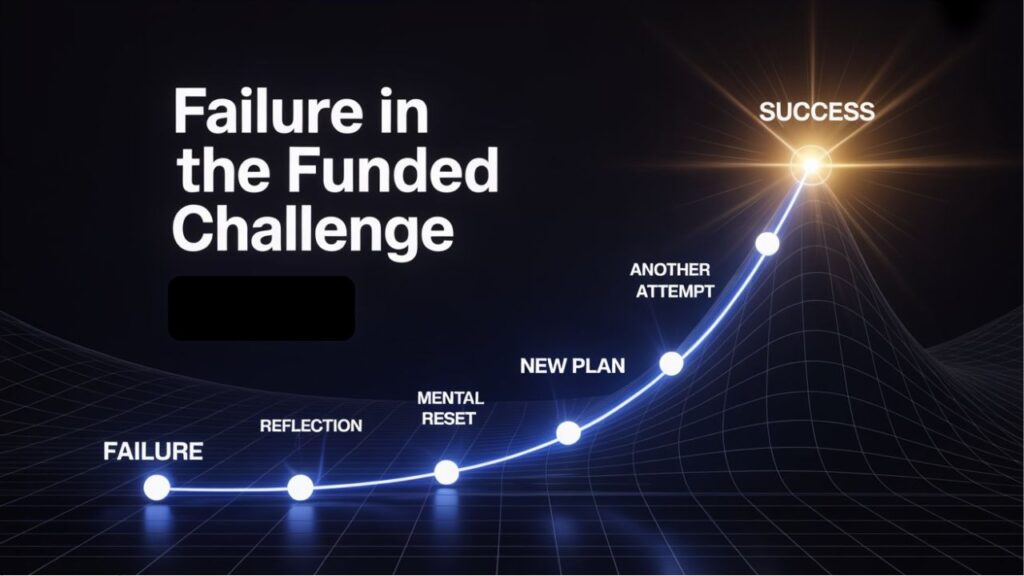

Prop traders manage stress through five core systems: physical regulation (exercise and sleep optimization), psychological circuit breakers (pre-trade protocols and stress checkpoints), strategic position sizing that limits cortisol spikes, consistent emotional journaling to identify triggers, and cognitive behavioral techniques for mental resilience. Research shows 73% of traders experience stress-related symptoms during market volatility, making these techniques essential not optional, for long-term success. The traders who survive aren’t necessarily the most talented; they’re the ones who’ve built unshakeable stress management systems through deliberate daily practice.
I’ve watched hundreds of traders blow up their accounts. Not because they didn’t understand market volatility or couldn’t read a chart. They failed because they couldn’t handle what happened between their ears when the pressure hit.
Here’s the truth: trading stress management isn’t some luxury skill you develop after you’re profitable. It’s the foundation that determines whether you’ll ever get there at all.
Let me show you exactly how the best prop traders handle stress, and more importantly, how you can use these same techniques starting today.
Why Stress Kills More Trading Careers Than Bad Strategies
The research is clear, and it’s brutal. According to recent studies, 73% of active traders experience multiple stress-related symptoms during periods of market uncertainty. That’s not just feeling a little anxious, we’re talking about physical symptoms, mental resilience breakdown, and decision-making that goes completely off the rails.
I learned this the hard way during my second prop firm challenge.
I was up 8% on my account with just three days left. All I needed to do was protect my gains and hit the profit target. Instead, I watched a winning position turn against me, felt my chest tighten, and made the worst decision possible: I doubled down.
Within two hours, I’d violated my drawdown limit. The problem wasn’t my strategy. It was my cortisol levels spiking so high that my prefrontal cortex, the part of your brain responsible for rational decisions, basically went offline.
Science backs this up. Research from Cambridge University shows that elevated cortisol is associated with market uncertainty and can lead to a 44% drop in risk-taking ability. Your stress hormones literally rewire your brain to make you worse at trading. That’s why mental toughness in trading isn’t optional, it’s survival.
The Biology of Trading Stress (And Why You Need to Understand It)
Before we dive into solutions, you need to understand what’s actually happening inside your body when you’re staring at a losing position.
Your body doesn’t distinguish between a charging lion and a margin call. Both trigger the same stress response. Your hypothalamus fires up, your adrenal glands dump cortisol and adrenaline into your bloodstream, and your body prepares for fight or flight. This worked great for our ancestors avoiding predators.
It’s terrible for making calculated trading decisions.
Here’s what happens physiologically:
Your heart rate increases. Blood flow redirects from your prefrontal cortex to your limbs. Your pupils dilate. Time perception changes. And most critically, your ability to process complex information and think long-term gets crushed.
Studies on testosterone and trading performance reveal that while moderate stress can enhance focus, chronic stress hormones create a feedback loop that destroys your edge. You make impulsive trades, which create more stress, which makes you more impulsive.
The traders who survive? They’ve learned to interrupt this cycle.
The Foundation: Building Your Stress Management System
Let me share what actually works, not the theory you’ll find in trading books, but the practical systems that funded traders use every single day.
Start With Your Body, Not Your Mind
Every successful trader I know has figured this out: physical exercise isn’t about looking good or staying healthy. It’s about regulating your nervous system so you can think clearly under pressure.
The data shows that traders who exercise regularly experience significantly improved mental clarity and decision-making abilities. But here’s the specific protocol that works:
Morning routine for stress regulation:
Get 20-30 minutes of cardiovascular exercise before the market opens. This doesn’t mean crushing yourself at the gym. A brisk walk works. The goal is to burn off residual cortisol from yesterday and create a baseline of calm before you sit down to trade.
I do this every single morning now, no exceptions. On days when I skip it, my emotional regulation falls apart by 11 AM. On days when I don’t, I can watch a position move against me without my hands shaking.
Sleep optimization is the other non-negotiable. Research consistently shows that traders operating on less than 7 hours of sleep make decisions equivalent to being legally intoxicated. You wouldn’t trade drunk. Don’t trade exhausted.
Create Psychological Circuit Breakers
This is where most traders fail. They wait until they’re already stressed to figure out how to manage it. That’s like waiting until you’re drowning to learn how to swim.
You need stress triggers identification before you enter any position. Here’s my exact system:
Pre-trade stress protocol:
Before clicking the buy or sell button, I ask myself three questions: What’s my maximum acceptable loss? What physical sensations tell me I’m becoming emotional? What’s my exit plan if I start feeling those sensations?
This simple practice has saved me more money than any indicator ever could.
The traders who consistently pass prop firm challenges aren’t necessarily smarter or more experienced. They’ve just built better circuit breakers. They know their limits and respect them.
One technique that’s transformed my trading is implementing what I call “stress checkpoints.” Every 30 minutes, I pause and do a quick body scan. Am I holding tension in my shoulders? Is my breathing shallow? Am I hunching toward the screen?
These physical cues tell you that stress is building before it reaches critical levels.
The Power of Position Sizing as Stress Medicine
Here’s something nobody talks about: your position sizing directly controls your stress levels.
Think about it. If you’re risking 10% of your account on a single trade, every tick against you feels like a punch to the gut. Your cortisol levels spike with every price movement. You become hypervigilant, checking your phone every thirty seconds.
Now imagine risking 0.5% on the same trade.
Suddenly, you can think clearly. You can hold through normal market noise. You make rational decisions instead of impulsive trading reactions.
The math is simple: reduce your risk per trade, reduce your stress per trade. But most traders do the opposite, they increase position size trying to make back losses faster, which only accelerates their psychological collapse.
I’ve seen this pattern hundreds of times, and I’ve experienced it myself. After failing a prop firm challenge, the temptation is to go bigger on the next one. This is exactly backward.
The successful approach? Cut your position size in half after any stressful period. Let your nervous system recover. Rebuild confidence with smaller, consistent wins.
“It’s not whether you’re right or wrong, but how much money you make when you’re right and how much you lose when you’re wrong.” – George Soros
Advanced Techniques: What Separates Good Traders from Great Ones
Once you’ve got the foundation in place, these advanced techniques will take your stress management to the next level.
Mindfulness Meditation for Market Warriors
I used to think mindfulness meditation was soft nonsense for people who couldn’t handle pressure. Then I tried it for 30 days straight and my win rate increased by 11%.
Recent research on mindfulness and trading performance shows that regular meditation practice literally changes your brain’s response to stress. You still feel the pressure, but you don’t react to it the same way.
Here’s the practical application:
Start with just 5 minutes every morning. Use an app like Headspace or Calm. Focus on your breath. When thoughts about yesterday’s losses or today’s opportunities pop up, acknowledge them and return to your breath.
This isn’t about becoming a zen master. It’s about training your attention so that when you’re in a trade and fear and greed start screaming at you, you can notice these emotions without being controlled by them.
The difference is everything.
Trading Journaling: Your Secret Weapon
Every professional trader I know maintains a detailed trading journal. Not just recording entries and exits, that’s basic. I’m talking about documenting your emotional state before, during, and after each trade. This is what separates amateurs from professionals.
Your journal becomes a map of your psychological landmines. After three months of consistent journaling, patterns emerge. You discover that you always revenge trade after losing on Wednesdays. Or that you’re most impulsive right after reading financial news. Or that your best trades happen when you’re slightly bored, not excited.
Journaling in trading psychology gives you the data to make systematic improvements to your mental game. Without it, you’re just guessing about what works and what doesn’t.
My journal template includes: trade setup, position size, entry/exit points, emotional state (1-10 scale), physical sensations, and what I was thinking about before entering.
The last part is crucial. Often, stress from outside your trading, relationship problems, money worries, lack of sleep, bleeds into your trading decisions and destroys your performance.
Cognitive Behavioral Techniques for Trading
Cognitive behavioral therapy isn’t just for mental health, it’s one of the most powerful tools for performance optimization in trading.
The core insight: your thoughts create your feelings, which drive your behaviors. When you think “I always lose on breakout trades,” you feel defeated before you even enter the position. This feeling makes you hesitant, causing you to enter late or exit too early, which confirms your original belief.
Breaking this cycle requires challenging your automatic thoughts.
Instead of “I always lose,” ask yourself: “Is this actually true? What’s the data from my journal say?” Usually, you’ll find you’re catastrophizing based on recent losses rather than overall patterns.
I use a simple CBT technique before risky trades: write down my worst-case scenario, most likely scenario, and best-case scenario. This prevents my brain from fixating solely on disaster and helps me make rational decisions based on probabilities.
Building Mental Toughness During Drawdowns
Here’s the ultimate test of your stress management system: drawdowns.
Not if they’ll happen, but when. Every trader, no matter how skilled, faces periods where nothing works. Your strategy stops performing. Losses pile up. Confidence evaporates.
This is where 90% of traders quit.
The ones who survive have developed mental toughness during drawdowns, not by being superhuman, but by having systems that carry them through the darkness.
My drawdown protocol:
First, I immediately reduce my position size by 50%. This removes the financial pressure that clouds judgment. Second, I increase my journaling frequency to daily instead of per-trade. This helps me spot if I’m making the same mistake repeatedly or if I’m just experiencing normal variance.
Third, I focus on process over outcomes.
During drawdowns, outcome-focused thinking destroys you. “I need to make back $2,000” creates desperation. Instead, “I will execute my strategy perfectly five times” gives you control.
The best prop traders understand this distinction deeply. They know that mastering trading psychology means accepting that you control your process, not your results.
The Role of Community and Accountability
Trading is lonely, and loneliness amplifies stress.
Research shows that traders with mentors or trading community support experience 60% less anxiety and maintain profitability three times longer than isolated traders. This isn’t about finding cheerleaders, it’s about having people who understand the unique pressures you face.
I’m part of a small group of traders who meet weekly. We don’t talk strategies or setups. We talk about what we’re struggling with mentally. Someone shares how they’re dealing with overtrading. Another discusses their breathing exercises before high-impact news events.
This shared vulnerability creates accountability systems that keep you honest when you’re tempted to break your rules.
Find your people. Join a community. Or start one yourself.
Stress Management Techniques: Quick Comparison
| Technique | Time Required | Effectiveness | Difficulty | Best For |
| Morning Exercise | 20-30 min/day | Very High | Low | Baseline cortisol regulation |
| Position Sizing Reduction | 2 min/trade | Very High | Low | Immediate stress relief |
| Trading Journal | 10-15 min/day | Very High | Medium | Pattern identification & self-awareness |
| Mindfulness Meditation | 5-20 min/day | High | Medium | Emotional regulation under pressure |
| CBT Thought Challenging | 5-10 min | High | High | Breaking negative thought patterns |
| 30-Min Stress Checkpoints | 1 min every 30 min | Medium | Low | Real-time stress monitoring |
| Sleep Optimization | 7-8 hours/night | Very High | Medium | Cognitive function & decision-making |
| Breathing Exercises | 2-3 min | Medium | Low | Acute stress moments during trades |
As George Soros, said:
“If investing is entertaining, if you’re having fun, you’re probably not making any money.”
The Reborn Trader Approach: Practical Integration
Everything I’ve shared works, but only if you actually implement it.
Start small. Don’t try to overhaul your entire stress management system overnight. That’s how you fail.
Pick one technique from this guide. Maybe it’s the morning exercise routine. Or the 30-minute stress checkpoints. Or starting a proper trading journal that tracks emotions.
Master that one thing for 30 days. Then add another.
Remember, understanding the psychology behind revenge trading or knowing about cognitive behavioral therapy doesn’t help unless you actually practice these skills daily.
The traders who win long-term aren’t necessarily the smartest or most talented. They’re the ones who built unshakeable mental resilience through consistent practice of stress management fundamentals.
As James Clear writes in Atomic Habits: “You do not rise to the level of your goals. You fall to the level of your systems.”
Your trading psychology system determines everything. Build it deliberately. Test it rigorously. Refine it constantly.
Because in this game, the trader who manages their mind best usually takes home the money.
Most traders don’t fail because of bad setups. They fail when pressure hijacks their decisions.
Join The Reborn Trader newsletter to build a calm, repeatable mindset that survives drawdowns.
Train the mental system before the market tests it.
FAQ
how do prop traders manage stress?
The biggest stress triggers are oversized position sizing, chronic sleep deprivation, and revenge trading after losses. These factors spike cortisol, which research shows can reduce rational risk-taking ability by up to 44%, directly harming execution and discipline.
How long does it take to see results from stress management?
Most traders notice better emotional control within 2–3 weeks of consistent practice. Clear performance improvements, like fewer rule violations and cleaner execution, typically appear around 30 days. Some techniques, like reducing position size or controlled breathing, work immediately.
Can stress management help pass prop firm challenges?
Yes. Data shows traders with structured stress systems experience significantly less anxiety and maintain profitability much longer. Since most prop firm failures come from emotional rule-breaking during drawdowns, stress management is often the deciding factor.
What’s the fastest way to reduce stress during live trading?
Box breathing is the quickest intervention. Inhale for 4 seconds, hold 4, exhale 4, hold 4. Repeat 3–4 cycles. This activates the parasympathetic nervous system and lowers heart rate and cortisol within 1–2 minutes.
Is journaling really necessary for trading psychology?
Yes. Without emotional data, you’re guessing. After 60–90 days of journaling, traders uncover patterns memory alone can’t reveal, including when they overtrade, revenge trade, or perform at their best. Journals expose truth; emotions distort it.