
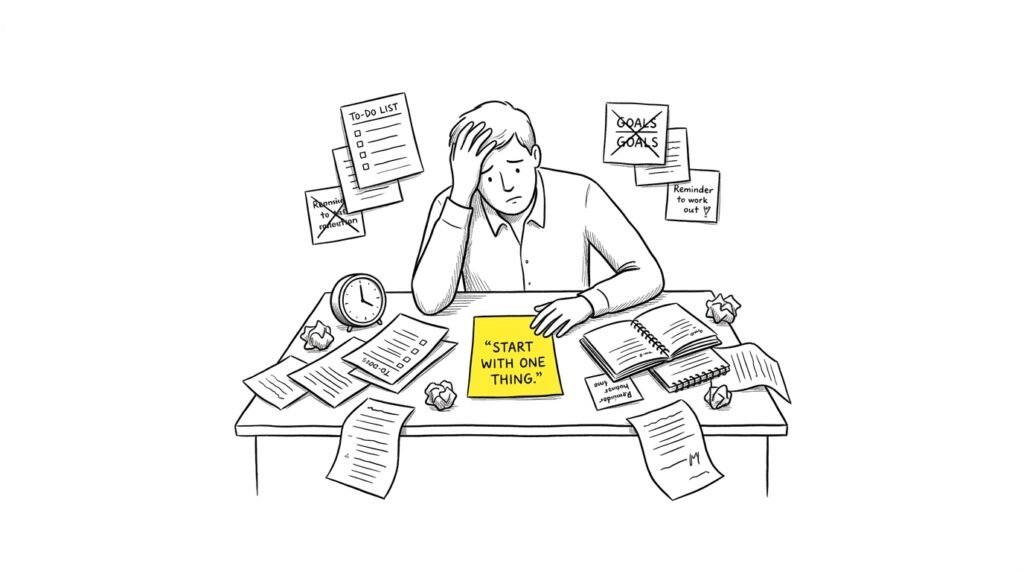
Have you ever reached the end of a day feeling exhausted, yet somehow nothing important has moved forward? Your work is unfinished, your habits are inconsistent, your room needs attention and your mind keeps reminding you of everything you should be doing.
The problem isn’t always a lack of discipline. Sometimes, you’re trying to solve too many problems at once.
I once came across a familiar situation, people discussing how they wanted to change their lives, get organized, build better habits, and become more productive. Everyone had a long list of things to fix. But the longer the conversation continued, the more overwhelming everything seemed.
It made me think about something important. When life feels like a mess, we often don’t need another list of tasks. We need to decide which problem deserves our attention first.
That’s the starting point for learning how to get your life together. You don’t have to rebuild everything today. You need a practical way to regain control, one decision at a time.
Why you feel overwhelmed when your life is disorganized
When your responsibilities pile up, your mind can start treating every unfinished task as equally urgent. A missed deadline, an unhealthy routine, financial stress, and a cluttered environment all compete for your attention.
This creates a cycle. You feel overwhelmed, delay making decisions, fall further behind, and then feel guilty about not doing enough.
Psychologist Peter Gollwitzer’s research on implementation intentions explores how specific if-then plans can help people translate intentions into action. The practical lesson is simple: deciding exactly when and how you’ll take a step can make starting easier than relying on motivation alone.
But before building new routines, you need to reduce the pressure you’re carrying.
The Three-level reset: A practical way to get your life together
Instead of attempting a complete life transformation, use three levels: Stabilize, Simplify, and Build.
Stabilize: Handle urgent problems first
When everything feels urgent, start by separating genuine emergencies from problems that can wait.
Ask yourself three questions:
- What must be handled today?
- What could create a serious problem if I ignore it for another week?
- What am I worrying about that doesn’t require immediate action?
Suppose you’re behind at work, sleeping poorly, and frustrated with your fitness routine. You don’t need to fix all three immediately. If a work deadline is tomorrow, completing the essential part of that task may be your first priority. If you’re dangerously exhausted, rest may need to come first.
The goal is to protect your basic needs and prevent manageable problems from becoming bigger ones.
Your action: Write down everything occupying your mind. Mark only the tasks that genuinely require attention today. Choose one and begin with the smallest useful step.
You aren’t abandoning the other responsibilities. You’re creating enough stability to approach them properly.
Simplify: Focus on what matters most
Once immediate pressures are under control, look for the problem creating the most friction in your life.
This is where many people make a mistake. They create a complete life reset plan with ten new habits, an ambitious morning routine, a fitness schedule, and several personal goals. Their plan demands more energy than they currently have.
Instead, ask: Which single improvement would make the rest of my life easier to manage?
For one person, it might be establishing a consistent sleep schedule. For another, it could be organizing their finances, finishing overdue work, or reducing unnecessary commitments.
Imagine someone whose mornings are chaotic because they sleep late, wake up rushed, and start work without a plan. They could try changing their entire lifestyle. Or they could begin by preparing their clothes, workspace, and first task the night before.
One small adjustment removes several obstacles at once.
Your action: Choose one high-impact problem for the next seven days. Temporarily reduce low-priority commitments, postpone unnecessary projects, and stop adding new goals until you have made progress on this one.
Getting unstuck doesn’t mean doing more. It means making the next useful action easier to take.
3. Build: Create one routine that supports tomorrow
Once you’ve reduced the immediate pressure, establish one repeatable routine. Don’t build a perfect schedule. Build a reliable starting point.
For example, you might spend ten minutes each evening reviewing tomorrow’s responsibilities. Write down your most important task, prepare what you need, and decide when you’ll begin.
This simple routine reduces the number of decisions you must make the next morning.
You could also create a daily reset with three questions:
- What is the one thing I need to complete today?
- What can I remove or postpone?
- What small action will make tomorrow easier?
Keep the routine short enough to follow on difficult days. Five consistent minutes are more useful than an elaborate system you abandon after two days. If you miss a day, return to the routine without turning one setback into a reason to quit.
The purpose isn’t to control every minute. It’s to create a dependable structure that helps you move forward even when motivation is low.
Read: How to Reprogram Your Subconscious Mind for Positive Change
How to start when you feel completely stuck
If you’re wondering where to start when life feels overwhelming, don’t wait until you feel ready to change everything.
Try this today:
- Spend five minutes writing down your unfinished responsibilities.
- Identify the one issue that needs attention first.
- Take one action that moves it forward.
- Decide what can wait until tomorrow.
- Set aside five minutes tonight to prepare for the next day.
That’s your first life reset. That’s how you organize your life in five simple steps
You may not feel dramatically different after completing these steps. That’s fine. The immediate goal is not to transform your emotions. It’s to create evidence that you can make a decision and follow through.
Over time, these small actions can help you rebuild trust in your ability to manage your responsibilities.
You don’t need to fix everything today
Getting your life together isn’t a single breakthrough. It’s a process of making better decisions about what deserves your attention, what can wait, and what you can realistically handle. Start by stabilizing your situation. Simplify your priorities. Then build one routine that makes the next day easier.
Your life doesn’t have to be perfectly organized before you can move forward. You only need to know what to do next.
Take five minutes today and identify the one problem you can make smaller. Then act on it.
What is the first thing you would fix if you stopped trying to fix everything at once?
Share your thoughts, subscribe to my newsletter for practical insights on rebuilding your habits, mindset, and identity, and follow me on social media for more lessons on creating meaningful change.
How do I get my life together when everything feels overwhelming?
Start by writing down everything that’s causing stress, then identify what genuinely needs your attention first. Focus on one manageable problem instead of trying to change your entire life at once.
Where should I start when my life feels like a mess?
Begin with the area creating the most immediate pressure, whether it’s unfinished work, financial responsibilities, or a disrupted daily routine. Handle urgent needs first, then choose one small action that makes tomorrow easier.
How can I organize my life and stay consistent?
Create a simple daily routine with one main priority and a short review of what needs attention next. Keep the routine realistic enough to follow on difficult days, and restart without guilt when you miss a day.
How do I get unstuck when I feel behind in life?
Stop comparing your current situation with where you think you should be and identify one thing you can influence today. Take a small, specific action and repeat it until you begin building momentum.