
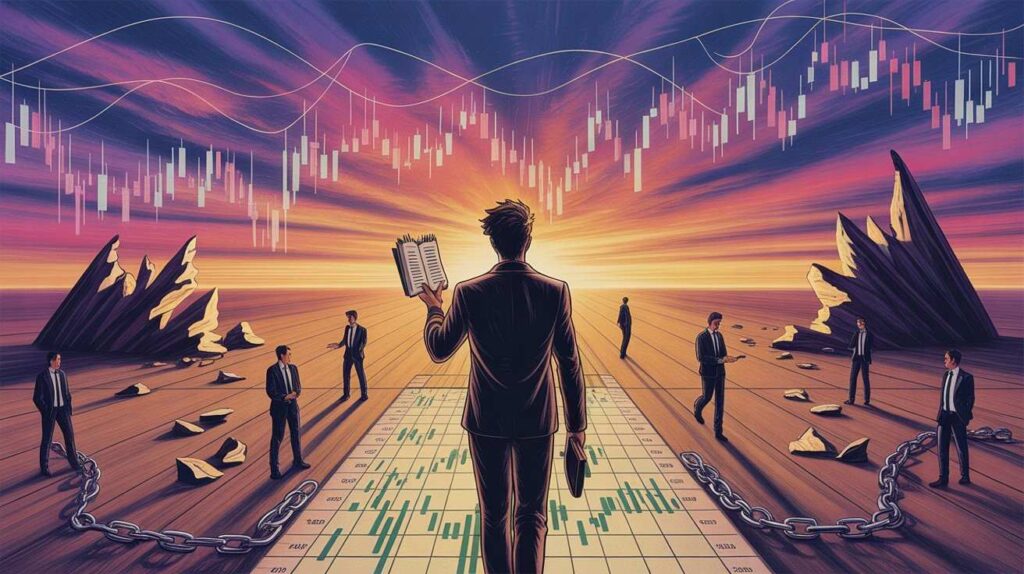
Traders spend years searching for the perfect indicator. They jump from strategy to strategy, buy course after course, and still end up in the same emotional loop, frustrated, inconsistent, and quietly wondering if they’re even built for this.
Here’s what nobody says out loud: the real problem isn’t your strategy. It’s your mindset.
Carol Dweck’s groundbreaking research on growth mindset vs fixed mindset completely changed how psychologists understand human performance under pressure. And once I applied her framework to my own trading, the shift wasn’t dramatic, but it was permanent.
This isn’t motivational content. This is a practical, strategist-level guide on how trading psychology and growth mindset work together and what you can actually do about it, starting today.
What Carol Dweck Actually Said And Why It Matters for Traders
Carol Dweck is a Stanford psychologist who spent decades studying how people respond to failure and challenge. Her core finding was deceptively simple: people either believe their abilities are fixed at birth, or they believe abilities can be developed through effort and reflection.
Two beliefs. Two completely different performance outcomes.
And in trading, that distinction becomes brutal very fast. The market is one of the most psychologically hostile environments a person can enter. Every session tests not just your technical skill, but your emotional resilience as a trader, your relationship with uncertainty, and your ability to detach self-worth from a single outcome.
A fixed mindset trader hears a loss and immediately thinks: “Maybe I’m just not cut out for this.” They react personally. They protect their ego by blaming the market, the broker, the economic data anything except their own repeating patterns.
A growth mindset trader asks a completely different question after the same loss: “What is this trade actually telling me about my process?”
“The market doesn’t punish ignorance. It punishes the refusal to learn from it.” Shahzaib Khan
That single shift, from protecting ego to extracting information is what separates traders who evolve year after year from traders who repeat the same expensive mistakes indefinitely.
The Fixed Mindset Trap Most Traders Fall Into
Let me be direct about something uncomfortable. There was a phase in my own trading where I genuinely believed discipline meant taking every single setup. I thought consistent trade execution meant showing up every day and forcing activity regardless of what the market was clearly communicating. That belief felt like professionalism at the time.
It wasn’t. It was stubbornness dressed up as discipline and it cost me.
The three most destructive fixed mindset patterns in trading, ones I’ve personally lived through and seen repeated endlessly, look like this:
Taking Losses as Personal Failures
When you tie your self-worth directly to your daily PnL, every red candle becomes a threat to your identity. You stop analyzing the trade with any objectivity. You start reacting entirely to the emotional pain of being wrong.
That’s not trading anymore. That’s ego defense. And ego defense is one of the most expensive emotional states you can bring to a live account.
Revenge Trading After Drawdowns
One bad trade becomes three. Three becomes a blown session, not because the setups were there but because your emotional brain needed to recover the loss and feel correct again.
Revenge trading psychology is almost entirely a fixed mindset response to failure. It’s the refusal to accept that loss is a natural, statistically inevitable part of any legitimate trading strategy. When you stop revenge trading, you stop treating the market like it owes you recovery.
Quitting at the Reflection Threshold
Most traders quit or impulsively jump to a completely new strategy exactly at the moment they need to sit quietly and review their own behavioral patterns. They conclude the strategy failed.
In most cases, their emotional trading discipline failed. The strategy itself was never tested properly, because the emotional framework required to execute it consistently was never built.
Growth mindset for traders reframes that moment entirely: failure is data, not identity. That distinction is the entire game.
What Growth Mindset Trading Actually Looks Like in Practice
This is where strategy becomes actionable. Developing a growth mindset in trading isn’t about reading motivational quotes before market open. It’s not toxic positivity or pretending drawdowns don’t hurt. It’s about building specific daily habits that generate genuine self-awareness, the kind that actually changes behavior over time.
Process-Based Performance Review
Stop measuring your trading day by profit and loss alone. That metric, on its own, tells you almost nothing useful about whether you’re improving.
Instead, measure consistently by process quality. After every single session, ask yourself these four questions:
- Did I follow my trading plan exactly as written?
- Was the market structure genuinely appropriate for my edge today?
- Did I manage risk according to my pre-defined rules?
- At what specific moment did emotion override logical execution?
One losing trade executed with complete discipline is more valuable to your development than a winning trade born entirely from an impulsive, emotional decision. Process-based trading builds sustainable, compounding consistency. Pure outcome-chasing builds emotional volatility that eventually empties accounts.
The Emotional Trading Journal Most Traders Skip Entirely
Most traders journal their entries, exits, and technical notes. Almost nobody journals their emotional state honestly and that missing data is often where the real problem lives.
Your trading journal for mindset improvement should capture what you felt in the thirty seconds before entry. It should record the impatience you felt during consolidation, the overconfidence that crept in after three winning trades in a row, and the exact moment you deviated from your plan and the honest emotional reason why.
Over several weeks of consistent tracking, you’ll start identifying a pattern, not a technical chart pattern, a behavioral one. That behavioral pattern, once clearly seen, is the thing worth actually fixing.
Recognizing When Doing Nothing Is the Right Trade
This specific lesson genuinely took me longer to accept than any technical concept in trading.
Some days, market conditions for your specific strategy simply don’t align with your edge. The price action is choppy and directionless, volume is thin, structure is undefined and contradictory. And emotionally reactive traders the earlier version of myself included, force trades anyway because sitting on the sidelines feels like wasting time, missing opportunity, or admitting defeat.
Strategic patience in trading is none of those things. It’s disciplined, deliberate restraint. It’s the ability to say clearly: “This isn’t my setup, and I’m completely fine with that.”
Every seasoned professional trader understands this: not trading is also a position. Often the most profitable one available that day.
The Identity Problem Nobody in Trading Talks About
Here’s something that almost every trading psychology resource quietly avoids. Your trading decisions don’t come from your strategy. They come from your identity, the story you tell yourself about what kind of trader you fundamentally are.
If you privately believe you’re impulsive, if that narrative runs in the background every time you open your platform, your actions will progressively align with that belief. You’ll keep unconsciously proving yourself right in the most expensive way possible.
Trading mindset transformation requires an identity shift at the foundation, not just a new habit layered on top of an unchanged self-concept.
You have to stop asking: “How do I make money today?”
And start genuinely asking: “What kind of trader am I in the process of becoming?”
That question operates on a completely different time horizon. It removes the corrosive emotional urgency from individual trades. It starts building a version of yourself that can actually handle the psychological weight this profession places on you every single session.
Read this: Trader’s Identity Crisis: Why Your Life Shapes Your Trades
Mark Douglas, Probabilistic Thinking, and Why One Trade Means Nothing
Mark Douglas spent his entire career trying to help traders internalize one foundational concept:
A single trade outcome is statistically meaningless in isolation.
Probabilistic thinking in trading means you operate from a wider perspective. You recognize that your edge plays out over a meaningful series of trades, not over one, not over a single week. Any individual outcome, win or loss, tells you almost nothing reliable about whether you executed your process well or poorly.
And yet emotionally, most traders treat every single trade like a complete referendum on their entire skill, their intelligence, and their right to be in this market.
Growth mindset for consistent traders helps build the psychological separation that Mark Douglas pointed toward his entire career, the clean gap between your self-worth as a person and whatever outcome the market delivers on a specific trade. When that gap genuinely exists, you execute with real emotional freedom. You follow your rules without requiring the market to validate your identity.
When that gap doesn’t exist, you trade for approval. And the market is a completely merciless judge of that need.
A Practical Growth Mindset Framework for Traders
Here is the exact framework I apply. You can implement this starting with your next session.
Before You Trade: Pre-Session Check
- Is today’s market condition clean and structured, or choppy and ambiguous?
- Am I emotionally neutral right now, or am I carrying unprocessed frustration from a previous session?
- Am I genuinely looking for valid setups, or am I manufacturing reasons to be active?
During the Trade: Execution Focus
- Am I focused entirely on execution quality, or am I watching PnL every ninety seconds?
- Is my risk management positioned exactly as my plan requires?
- Am I reacting to actual market information, or am I reacting to my own emotional state?
After the Session: Honest Review
- At what specific point did emotion influence a decision today?
- Did I deviate from my trading strategy, and if I’m honest, what was the real reason?
- What is one concrete, specific adjustment I’ll bring to tomorrow’s session?
This framework isn’t complicated. It requires honesty that most traders aren’t yet willing to consistently practice with themselves.
Emotional Resilience Is the Real Trading Edge
Raw intelligence is not what separates traders who last from traders who quit.
Emotional resilience in trading is the actual differentiator. The specific ability to absorb a drawdown without spiraling into panic decisions. To lose three trades back-to-back and return to your desk the following morning without dragging those losses into entirely new positions. To adapt your approach when market conditions shift without abandoning your entire framework in a moment of frustration.
That is a genuine, compounding, sustainable trading edge. It doesn’t show up on a backtest. It shows up in live account equity over years.
And it’s built entirely through the kind of growth mindset habits for traders that Dweck described, treating failure as feedback with actionable information, anchoring identity to process rather than to outcomes, and refusing absolutely to let individual results define your long-term capability.
The Shift That Actually Changes Everything
Most traders are out there right now looking for a better system.
The traders who genuinely last, the ones who build long-term trading consistency over years, not just one good month, figured out early that the system is very rarely the actual problem.
The person operating the system is.
Carol Dweck’s work on growth mindset and performance psychology isn’t motivational filler. It’s a precise, research-backed map for understanding why certain traders evolve meaningfully through pain while others stay locked in emotional loops for years without real progress. The difference isn’t raw talent. It isn’t starting capital. It’s whether you consistently treat every hard market lesson as actionable information or as final evidence that you don’t belong here.
You belong here. But the market will keep testing that belief, relentlessly, until you stop needing its daily approval to feel like a capable person.
That is the real work of becoming a professional trader. And it starts with how you choose to interpret the very next loss.
Want to Trade With a Clearer Head?
Every week inside The Reborn Trader Newsletter, Shahzaib breaks down the real psychological patterns destroying trader consistency and exactly how to fix them. No recycled theory, no generic advice. Just earned, honest insight from someone who has lived through the emotional chaos of trading and come out the other side with a clearer process.
If you’re serious about building long-term trading discipline, this is where that work actually begins.
Join the newsletter and start trading like the trader you’re becoming not the one you’ve been. Join here
What is growth mindset in trading and why does it matter?
Growth mindset in trading means treating every loss as feedback, not personal failure. It matters because how you interpret losses determines whether you evolve or stay trapped in the same emotional cycles for years.
How do I stop revenge trading after a loss?
Revenge trading is your ego trying to undo emotional pain immediately. Step away from the screen after any emotional loss, journal what you felt, and that awareness alone breaks the automatic cycle over time.
What is the difference between fixed mindset and growth mindset for traders?
A fixed mindset trader treats losses as proof they aren’t good enough. A growth mindset trader treats the same loss as data, something to study, adjust from, and move forward with.
Can trading psychology actually improve trading performance?
Absolutely. Trading psychology directly affects how consistently you execute your strategy under real pressure. A solid edge means nothing if emotions override your plan at the critical moment.
How long does it take to develop a growth mindset as a trader?
Most traders who journal honestly and review process daily notice real behavioral shifts within eight to twelve weeks. It’s not one breakthrough moment, it’s slow, deliberate erosion of old reactive habits.