Let me start with my own story, after my spinal cord injury, I had to face a reality I had never expected. The life I knew had changed and I had to figure out how to move forward from a place I never imagined being in.
Rehabilitation became part of my life. Progress required patience, repetition and the willingness to keep working even when things felt difficult. But physical rehabilitation was only one part of rebuilding myself.
I also had to think about my future. I started working online, trying to build something meaningful with the abilities and opportunities available to me. It was a struggle. I had to find my way through uncertainty while learning how to move forward in a life that looked different from the one I had imagined.
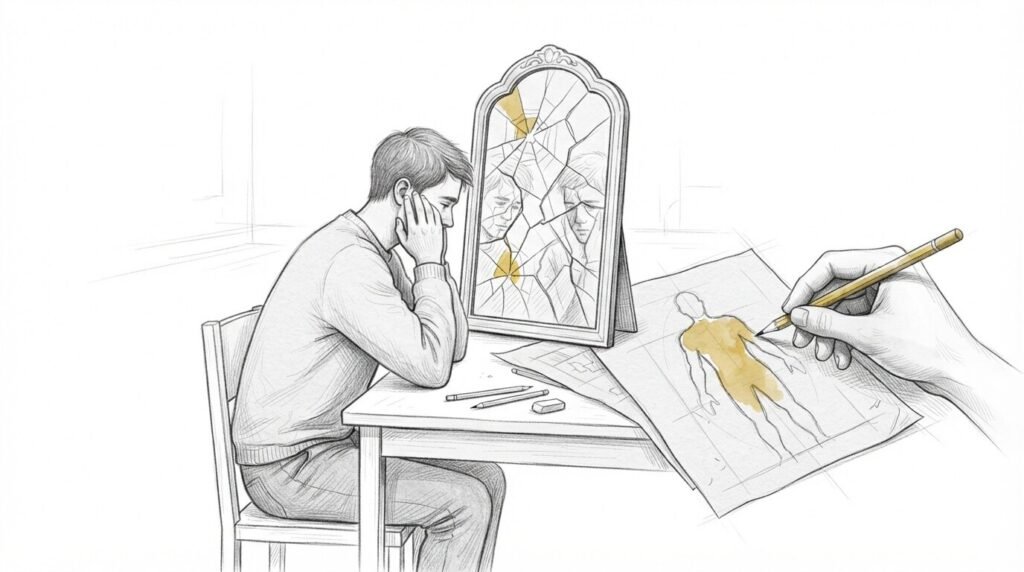
Experiences like this can change how you see yourself. You might no longer recognize the person you used to be. Your career might have disappeared, a relationship might have ended, or a life-changing event might have taken away the future you expected.
You begin asking questions you never needed to ask before. Who am I now? What can I do with my life? And how do I rebuild myself when the person I used to be no longer feels like me?
The answer isn’t to force yourself to become your old self again. It’s to understand what has changed, recognize what remains, and start building a new identity through your actions.
Why losing your identity makes rebuilding so difficult
We often build our identity around familiar roles. You might think of yourself as an athlete because you can perform physically demanding activities. You might identify as a successful professional because your career gives you a sense of purpose. You might see yourself as a reliable partner, a provider, or someone who always has everything under control.
These identities become part of the story you tell yourself, then suddenly something changes.
You lose your job, experience a major setback, go through a painful breakup, or face a physical limitation that changes your daily life. Suddenly, the activities that once made you feel like yourself are no longer available in the same way.
The problem is that you may confuse losing a role with losing your entire identity.
You tell yourself, “I used to be capable,” instead of asking, “How can I use my capabilities differently now?“
You compare your present circumstances with your past and interpret the difference as proof that you have become less valuable. This creates a difficult cycle. You keep looking backward for evidence of who you are while struggling to build evidence of who you could become.
You cannot build a new identity while measuring your entire life against the person you used to be.
— Shahzaib Khan
Your past matters. It contains experiences, relationships, skills, and lessons worth keeping. But it doesn’t have to dictate every part of your future.
The principle: Build your identity through evidence
James Clear explains identity-based habits in Atomic Habits: repeated actions help reinforce the beliefs we hold about ourselves. When you consistently practice a behavior, you begin collecting evidence that you are the kind of person who does it.
For example, writing regularly can help you see yourself as a writer. Keeping small commitments can help you see yourself as someone who follows through. This idea becomes especially useful when rebuilding yourself after a setback.
You don’t have to wake up one morning feeling confident, disciplined, or completely certain about your future. You can begin with actions that reflect the person you want to become.
If you want to become someone who keeps promises to yourself, start keeping one small promise each day.
If you want to become a skilled professional, spend time developing a skill and applying what you learn.
If you want to become more independent, identify one area of your life where you can make a decision or take action within your current circumstances.
The important distinction is that you don’t need to feel like the new version of yourself before you start acting like that person. Your actions can help you develop that belief over time.
The identity rebuild map: Five steps to start again
Instead of trying to redesign your entire life at once, use this five-step process.
Identify what changed
Before deciding who you want to become, understand what disrupted your previous identity.
Take a piece of paper and answer three questions:
- What happened that changed how I see myself?
- What part of my old life do I miss most?
- What am I afraid I can no longer become?
Be specific. Perhaps you miss the independence you had before an injury. Maybe you miss the confidence you felt in your previous career. Perhaps a relationship ended, and you no longer know how to define yourself outside it.
Don’t rush to replace these feelings with positive thoughts. Recognizing what you have lost is not the same as giving up. It helps you understand what you are actually trying to rebuild.
Sometimes, you are not missing the old job itself. You are missing the sense of competence it gave you. Sometimes, you are not missing a particular routine. You are missing the structure and control it provided. Understanding the difference helps you find new ways to meet those needs.
Your exercise: Write down the three things you miss most about your old life. Next to each one, identify the feeling or value behind it.
Read this: How to build self-trust after repeatedly breaking promises to yourself
Separate what changed from what remains
When a major setback happens, it can make everything feel uncertain. You may focus so heavily on what you can no longer do that you overlook what is still available to you.
This is where you need to separate your circumstances from your deeper values.
Ask yourself:
- What personal values still matter to me?
- Which skills can I still use or develop?
- Which relationships do I want to maintain?
- What interests or activities can I explore within my current circumstances?
Suppose your career has ended unexpectedly. You may have lost your position, income, and professional routine. But your curiosity, communication skills, experience, and willingness to learn may still be there.
You can use those strengths in a different role. In my own experience, moving toward online work after my spinal cord injury meant working toward a future that looked different from the one I had expected. I had to focus on what I could build from my circumstances rather than assume that my previous expectations defined all my possibilities.
This doesn’t mean every limitation can be overcome or every opportunity will be available. It means your circumstances do not automatically erase every strength you possess.
Your exercise: Make two lists. Call the first What Has Changed and the second What I Can Still Build On. Be honest about both.
Challenge the beliefs that keep you stuck
After losing part of your identity, you may begin repeating statements that sound like facts.
- “I’m not the person I used to be.”
- “I’ve fallen too far behind.”
- “It’s too late to start again.”
- “I can’t do anything meaningful now.”
The danger is that these statements can turn a difficult experience into a permanent definition of yourself.
Psychologist Aaron Beck’s cognitive therapy highlights how our interpretations of events influence our emotions and behavior. An event and the meaning we assign to it are not always the same thing.
For example, losing your job is an event. Believing that you are now a failure is an interpretation. You don’t need to pretend that losing your job is easy. You need to stop treating that experience as a complete judgment of your worth.
When a limiting belief appears, write it down and examine it.
Ask yourself:
- Is this a fact, or am I interpreting what happened?
- What evidence supports this belief?
- What evidence suggests the situation is more complicated?
- What is a more accurate way to describe my circumstances?
Instead of saying, “I’ve lost everything that made me who I am,” you might say, “Several important parts of my life have changed, and I’m learning how to build new ones.”
That statement doesn’t deny your loss. It leaves room for action.
Choose three small actions that reflect your new identity
This is where rebuilding becomes practical. Just don’t start by creating an ambitious plan to transform every part of your life. Choose three small actions that represent the person you want to become.
For example:
- If you want to rebuild your confidence: Complete one task each day that you have been avoiding.
- If you want to become more disciplined: Work on one meaningful priority for 15 minutes at a consistent time.
- If you want to develop a new professional identity: Spend 20 minutes learning a skill, practising it, or applying it to a real project.
Your actions should fit your current circumstances, energy, responsibilities, and physical abilities. Adjust them as needed. The purpose isn’t to prove that you can do everything you did before. It’s to create a pattern of behavior that supports the life you want now.
This is also where patience matters.
During rehabilitation, repetition was an important part of working toward progress. Rebuilding other parts of life requires a similar willingness to practise, review, and adjust. The outcomes may be different, and progress won’t always be predictable, but the principle remains useful: focus on the next action you can take.
Don’t ask yourself to rebuild your whole identity today. Ask yourself to complete one meaningful action today.
Review the evidence every week
One difficult day can make you feel as though nothing is changing. That’s why you need a way to recognize progress beyond how you feel in a particular moment.
Once a week, spend ten minutes answering these questions:
- What did I do this week that reflects the person I want to become?
- Which commitments did I keep?
- What made progress difficult?
- What should I adjust next week?
Keep your answers specific. Instead of writing, “I became more disciplined,” write, “I worked on my online project for 15 minutes on four days this week.”
Instead of writing, “I’m becoming more confident,” write, “I applied for an opportunity even though I was uncertain about the outcome.”
These details matter because they give you something concrete to look back on. You are no longer relying entirely on your emotions to decide whether you are making progress. You are examining what you have actually done.
And when you miss a day, don’t turn it into another reason to criticize yourself. Identify what got in the way, make the next action easier if necessary, and continue.
Remember one thing: One missed commitment is information. It doesn’t have to become your identity.
Stop trying to recreate your old life
There is an important difference between respecting your past and being trapped by it. You can miss who you were before a life-changing experience. You can grieve opportunities you lost and acknowledge that some things may never return in exactly the same form.
You don’t have to pretend, but you also don’t have to make your old identity the standard against which every future version of yourself is judged.
Psychologist Amy Wrzesniewski’s research on work identity and job crafting explores how people can reshape their work and its meaning around their strengths, values, and circumstances. The broader lesson is useful beyond employment: when your circumstances change, the way you express what matters to you can change too.
Perhaps you once expressed your ambition through physical performance. Now you express it through learning, creating, or helping others. Perhaps your career once gave you a sense of purpose. Now you are exploring a different way to contribute.
The expression changes. The underlying value may remain.
Rebuilding yourself isn’t about erasing your past. It’s about finding new ways to live out the values you still care about.
You are allowed to become someone different without treating the person you used to be as a failure.
Read this: How to start over in life when you feel you’ve wasted years
Start rebuilding yourself today
You don’t need to have your entire future figured out before you begin. Start by identifying what changed. Recognize what remains. Challenge the beliefs that limit your choices. Choose three small actions that reflect the person you want to become, and review your progress each week.
Your new identity will not emerge from one dramatic decision. It will develop through repeated choices, adjustments, and experiences. Some days, those choices will feel meaningful. On other days, they will feel ordinary. Both can be part of the process.
If you’re struggling to find yourself again after a life-changing experience, start with one question: What is one small thing I can do today that reflects the person I want to become, given the life I have now?
Write down your answer and take the first step. Because you don’t have to rebuild everything at once, you just have to give yourself a place to begin.
If this article helped you think differently about your own comeback, subscribe to my newsletter for practical ideas on identity, habits, mindset, and rebuilding your life. You can also follow me on social media for more reflections and tools to help you keep moving forward.
And I’d like to hear your story: Have you ever had to rebuild yourself after losing who you used to be? What helped you take the first step?
How do you rebuild yourself after losing your identity?
Start by identifying what changed and which parts of your former identity you miss most. Then separate what you have lost from the values, strengths, and relationships you can still build on. Choose small daily actions that reflect the person you want to become. Rebuilding yourself takes time, but consistent actions can help you develop a new sense of identity and direction.
How do I find myself again after a life-changing experience?
Begin by giving yourself permission to acknowledge how your life has changed. Instead of trying to return to who you were before, ask yourself what matters to you now. Explore your values, identify strengths you can use in your current circumstances, and experiment with new routines and meaningful activities. You don’t need to have your entire future figured out before taking your first step.
Is it normal to feel like you don’t know who you are anymore?
Yes. Major life changes, including a breakup, job loss, injury, or bereavement, can disrupt your sense of identity. When familiar roles and routines disappear, you may struggle to understand who you are outside them. This uncertainty does not automatically mean you have lost yourself permanently. Give yourself time to process the change, maintain supportive relationships, and gradually develop new sources of meaning and purpose.
How do you rebuild your life when you can’t return to the person you used to be?
Focus on building a meaningful life around your current circumstances rather than measuring everything against your past. Identify the values you still care about, adapt your goals to your present abilities and resources, and establish routines that support your future. You may not be able to recreate your previous life exactly, but you can find new ways to express your strengths, pursue meaningful goals, and create a sense of purpose.
How long does it take to rebuild your identity after a major setback?
There is no fixed timeline for rebuilding your identity. It depends on the nature of the experience, the support available to you, your circumstances, and the changes you need to make. Instead of waiting until you feel completely transformed, track small signs of progress each week. Keeping commitments, developing skills, reconnecting with others, and exploring new interests can help you gradually establish a stronger sense of who you are becoming.